
Subtotal $0.00 Subtotal: $0.00
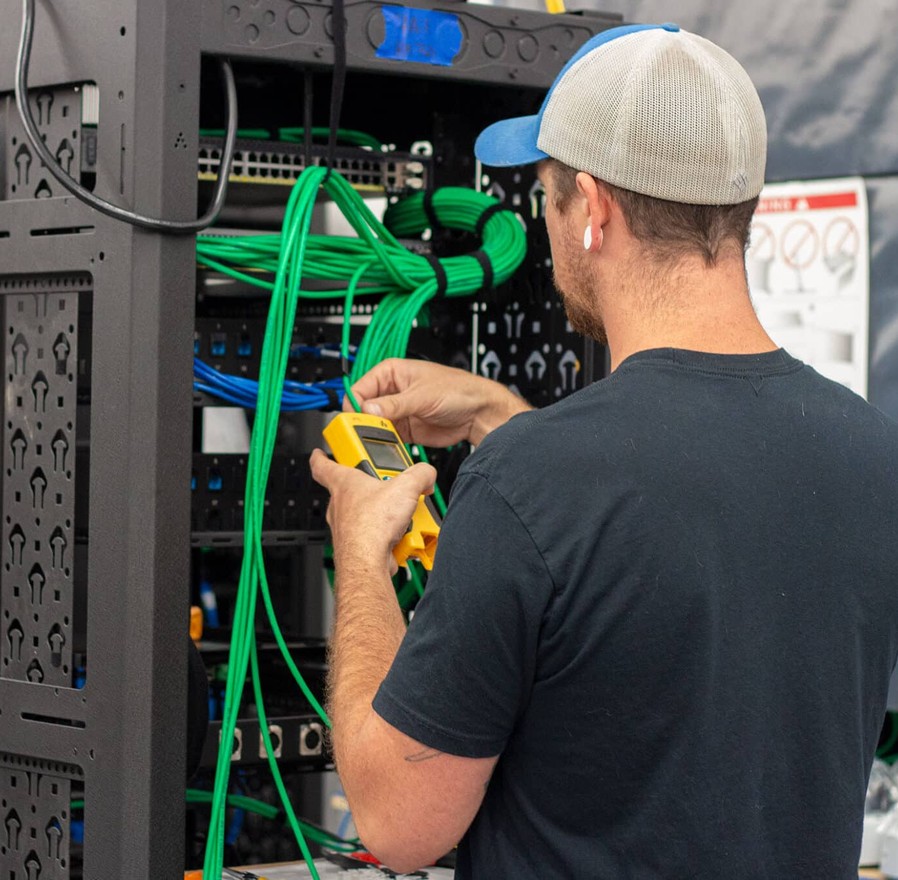
There is a fast way to judge the quality of a network you inherited. Ask to see the wiring closet. Not the report, not the cloud dashboard, the closet.
In a good one, every cable arrives at a patch panel, lands in a labeled port, and carries a label on both ends that matches a document. Cables reach the panel with slack that survives a second generation of changes, bend radius respected. Vertical and horizontal managers feed patch cords into the switches instead of the cords hanging in spaghetti. Power supply and UPS sit where a person can read their alarms. Nobody has stapled data cable to conduit, and nothing runs above the ceiling that does not belong there.
In a bad one, you learn the same story in ninety seconds. Cables disappear behind other cables. A third of them have no labels and the ones with labels have labels from the last tenant. Somewhere above the drop ceiling is a nest of abandoned Cat 3 that the National Electric Code explicitly says should be removed during new work, kept because removing it is labor and nobody budgets labor for problems that do not announce themselves.
The closet is the building. When a phone drops out or a camera goes dark, the question is always which run, and in an unlabeled closet that question takes hours instead of minutes, billed at outage rates. Overheating cable bundles degrade slowly, and then they degrade fast. And the fire code answer to “is it combustible?” is yes, all of it, which is why the tangle above the tiles is a compliance problem waiting for an inspection rather than a tidiness opinion.
The fix is a weekend-to-a-week job depending on size: survey, document, re-terminate, label, remove dead cable, install management hardware. It is the most boring project your business will approve this year, and the highest-yield dollar per hour on any network that grew without a plan.